Chunhui Lean Manufacturing Management Model (CPM, CHUNHUI Production Management). We draw on and learn from Japan's lean philosophy and America's innovation system, integrating them into management practices within the Chinese environment.High-qualityproducts and employees,High-efficiencyoperations and decision-making,Humanizedmanagement and environment as the goal, reducing costs, inventory, accounts receivable, non-value-added positions, unnecessary red tape and processes, and all unnecessary waste...
High-quality,We often say in public that Chunhui Smart Control produces two kinds of products: one is high-quality products for market customers, which is the foundation of the company's survival and development. The other is high-quality employees for society, which is the company's responsibility as part of a social organization. Only through continuous implementation of CPM can we believe that high quality does not necessarily mean high cost—it is achievable.
High-efficiencyShareholders entrust funds, equipment, land, factories, etc. to the management team, but why do some companies thrive while others barely survive? The most critical reason lies in whether the management's operations and decisions are “efficient.” We believe that asset-light fast turnover, lean flexible manufacturing, industry No.1, innovation and pioneering, teamwork, unique core competencies, per capita output growth, return on investment, total asset turnover, delivery capability growth, and revenue growth... these are all public quantitative and qualitative indicators reflecting high efficiency!
HumanizedAll employees of Chunhui Smart Control are the main body of CPM, and the goal of management is to unleash the creativity and potential of “people.” Therefore, adopting humanized management and cultivating a humanized working environment can first enhance employees' work enthusiasm and initiative, and also stimulate their creativity and willpower. In a humanized team, company, and society, besides one's own life, company goals and social responsibility are also the most important work, and the two are consistent! Therefore, humanization should be one of the purposes and goals of implementing CPM.
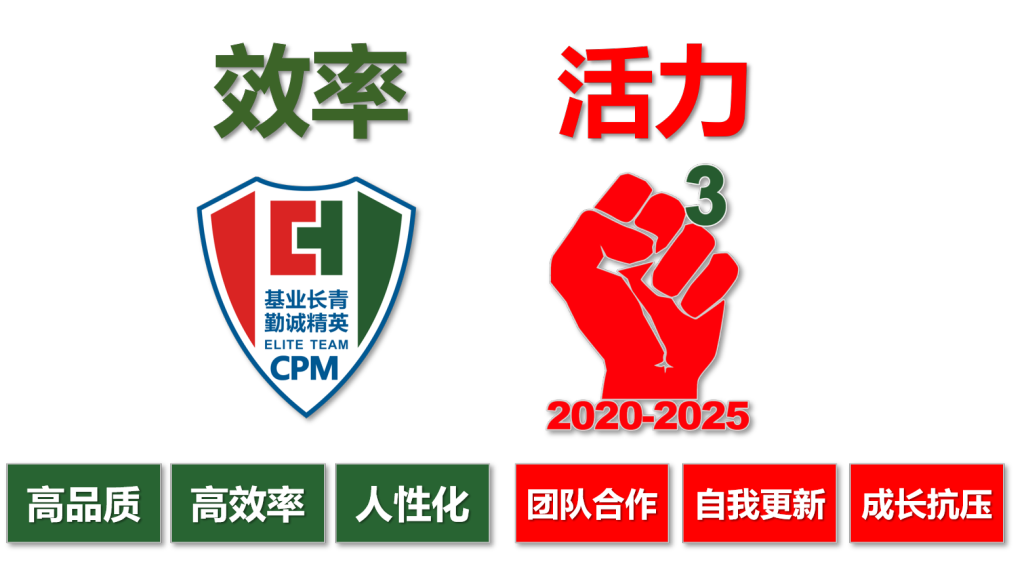
Secondly, by establishingTeamworkspirit,Self-renewalGenes andGrowth under pressureThe ability to enhance the vitality of company operations! In this regard, we will adopt the Triple-Speed Plan of the Golden Decade to invest in, cultivate, and enhance this vitality.
Compared to quantifiable efficiency, the most obvious feature of vitality is that it cannot be touched but can be felt, just like air is to humans and water is to fish. The vitality index, composed of teamwork, self-renewal, and growth under pressure, in fact, also falls within the scope of the company's operating atmosphere, legal environment, and corporate culture background. With the accumulation of time and management experience, these will gradually evolve into the company's genes. On one hand, this accumulation is the result of management efficiency, and on the other hand, it can also promote and enhance operational efficiency.
Compared to quantifiable efficiency, the most obvious feature of vitality is that it cannot be touched but can be felt, just like air is to humans and water is to fish. The vitality index, composed of teamwork, self-renewal, and growth under pressure, in fact, also falls within the scope of the company's operating atmosphere, legal environment, and corporate culture background. With the accumulation of time and management experience, these will gradually evolve into the company's genes. On one hand, this accumulation is the result of management efficiency, and on the other hand, it can also promote and enhance operational efficiency.
Teamwork It is the organizational spirit composed of a positive and open humanized cooperative atmosphere such as team cohesion, smooth information flow, and honest communication. Teamwork first respects individual personality and division of labor, pays attention to and actively encourages the development of potential and creativity; at the same time, as a team organization, it should further unify goals, integrate resources, and establish strategies and action plans through cooperation based on division of labor to form consensus. Although the spirit of teamwork in an organization cannot be quantified with specific numbers, we can indeed “see” it in three aspects of internal team cooperation: whether morale and cohesion are high, whether internal and external information flows freely, and whether communication among members is smooth!
Self-renewal It refers to the team organizational gene composed of management awareness or habits of innovation, continuous learning, and transformation and upgrading, which is the potential for team organizational development. From potential to actual capability, carrying excellent chromosomes of innovation and self-improvement means the vitality of this organizational life form is continuously enhanced, and thus the time and space of organizational life will also be constantly expanded and extended.
Growth under pressure It refers to the company's management team improving profitability, growth and expansion, and optimizing personnel structure through their own growth, thereby reducing the company's risk pressures in finance, legal affairs, customers, supply chain, and social responsibility. This self-growth ability mostly depends on the management experience of employees and teams; a fast-growing management team means enhanced management strength and the ability to resist internal and external risks.
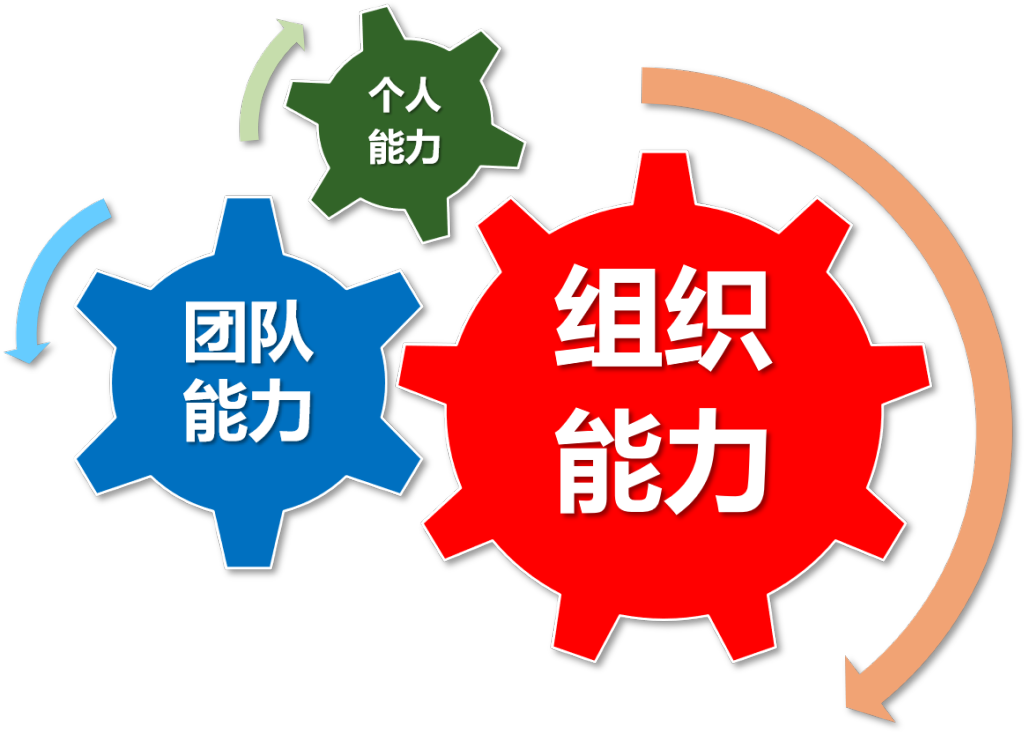
In executing the CPM and Triple-Speed Plan centered on efficiency and vitality, we will interact, track, promote, and monitor the management process through the board of directors, board of supervisors, and evaluation committee, and strictly adhere to four principles:
- Holistic—The scope of this management activity is company-wide and involves all employees. Therefore, through a holistic management scope, the CPM and Triple-Speed Plan are integrated into the company's culture and strategic execution.
- Full-process—Only by running management through the entire process of each functional department and implementing it at all different levels can the CPM and Triple-Speed Plan demonstrate their breadth and depth.
- Gradual—The CPM and Triple-Speed Plan break down tasks into several small tasks and implement them step by step according to their difficulty. The most effective approach is to start with the most important and urgent, proceeding from easy to difficult. We will not focus our attention on the 100 things to do in the future, but rather on the one thing that can be done here and now.
- Continuity—Without continuous improvement and persistence, the effects of the CPM and Triple-Speed Plan are impossible to achieve. From a strategic perspective, I believe this cycle should not be less than 10 years.
Chapters 63 and 64 of the Tao Te Ching say: “Plan for the difficult while it is easy, do the great while it is small; the world's difficult things must be done while they are easy, the world's great things must be done while they are small. What is stable is easy to maintain, what has not yet emerged is easy to plan; what is fragile is easy to break, what is minute is easy to scatter. Act before it exists, govern before it is chaotic. A tree that fills the arms grows from a tiny shoot; a nine-story terrace begins with a pile of earth; a journey of a thousand miles begins with a single step.” In fact, the principle is the same for achieving success in anything!
Zhejiang Chunhui Intelligent Control Co., Ltd.
Chairman